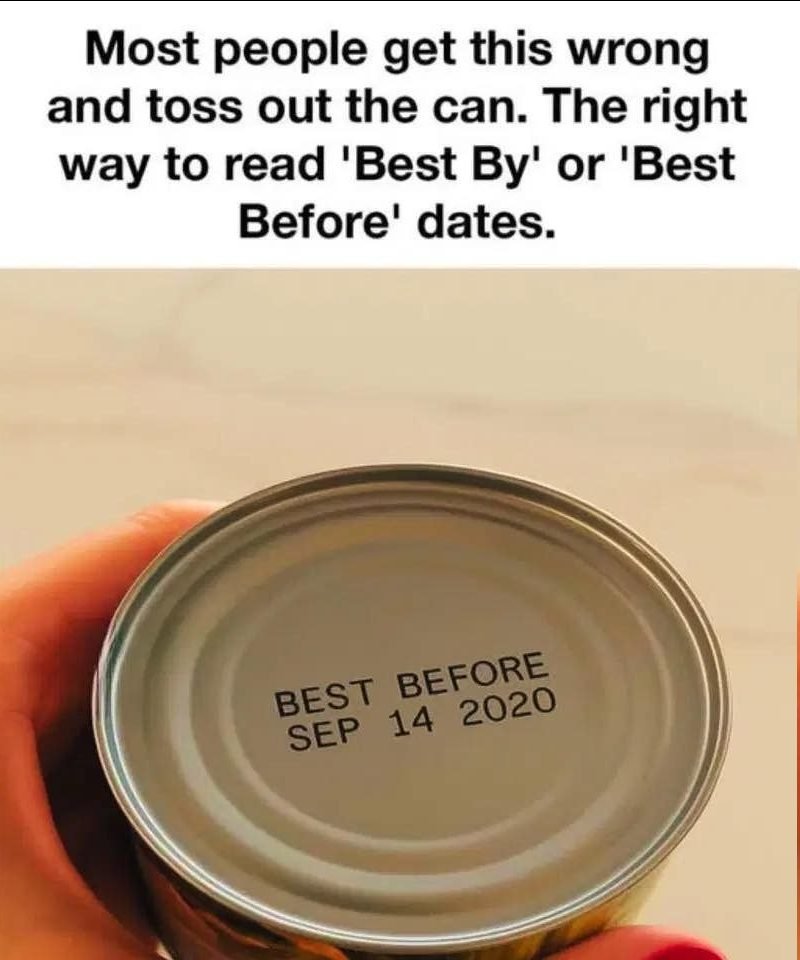
Walk into almost any kitchen, and you’ll likely find a few forgotten cans tucked away at the back of the pantry—beans, soup, vegetables, quietly waiting their turn. For many people, spotting a date that has already passed is enough reason to toss them out without a second thought. But this common habit raises an important question: are those canned foods truly unsafe, or have we simply misunderstood what those dates really mean? In a time where reducing food waste and making smarter household choices matter more than ever, understanding the truth behind expiration labels becomes incredibly valuable. This guide takes a closer look at how canned foods actually work, what those dates represent, and how you can confidently decide
It’s important to understand that most dates printed on canned foods are related to quality, not safety. A “Best By” or “Best Before” date indicates when the product is expected to have its best flavor, texture, and overall quality. After that date, the food may gradually lose some of its freshness, but it is not necessarily unsafe to eat.
A “Use By” date, on the other hand, is more closely related to safety and is typically found on perishable items like dairy or fresh meat—not shelf-stable canned goods.
How Long Do Canned Foods Last?
When stored properly in a cool, dry place away from direct sunlight, many canned foods can last well beyond their printed date. In general, they may remain safe for a long period of time if the can is intact and stored under proper conditions, although quality may decline over time.
High-acid foods such as tomatoes and fruits tend to have a shorter shelf life, while low-acid foods like beans, corn, and canned meats often last longer.