1. The Strawberry: A Popular and Nutritious Fruit
Strawberries are among the most widely consumed fruits worldwide. Known scientifically as Fragaria × ananassa, they are valued for their vibrant red color, juicy texture, and sweet flavor. Strawberries are rich in vitamins, especially vitamin C, as well as antioxidants, fiber, and essential minerals.
In addition to their nutritional benefits, strawberries are versatile in culinary use. They can be eaten fresh, blended into smoothies, used in desserts, or incorporated into salads. Because of their soft texture and exposed seeds, strawberries are also more vulnerable to environmental factors compared to fruits with thicker skins.
2. Observing the Unusual Cluster
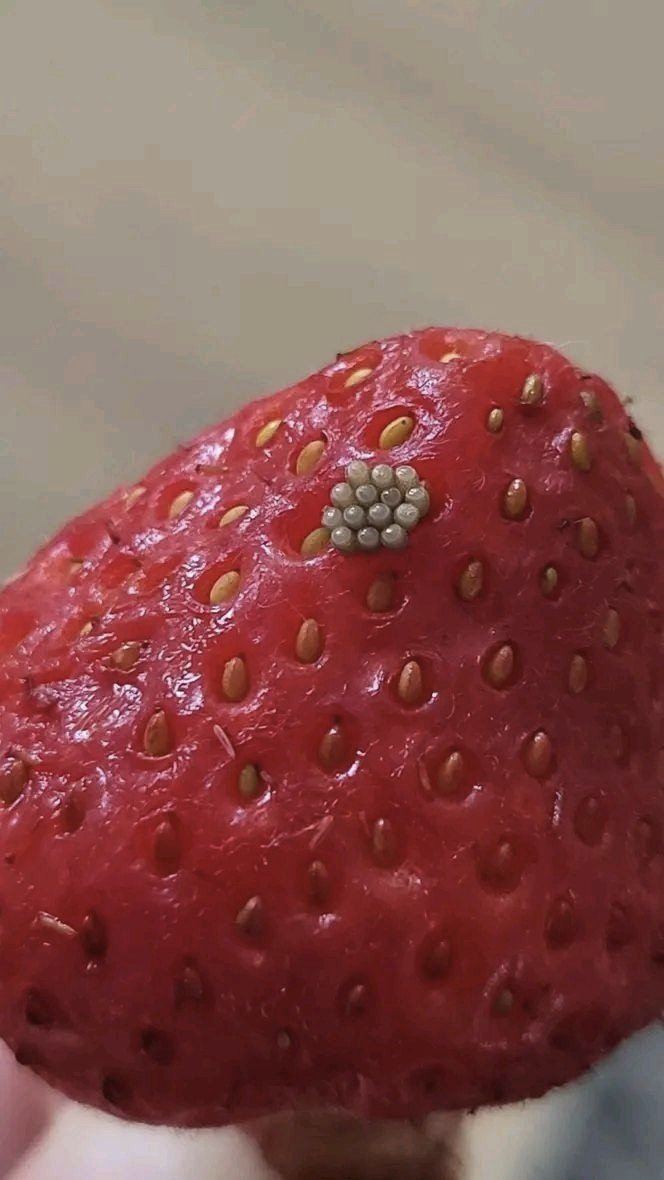
The image clearly shows a small group of round, pale objects clustered together on the surface of the strawberry. These objects appear uniform in size and shape, arranged closely in a circular formation. Their smooth texture and slightly glossy appearance make them stand out against the red surface of the fruit.
Such formations are not typical of the fruit itself. Strawberry seeds (often mistaken as seeds but actually achenes) are embedded in the outer surface and are yellowish, not clustered like this. Therefore, the presence of these round objects suggests an external factor.
3. Possible Explanation: Insect Eggs
One of the most likely explanations for this phenomenon is that the cluster represents insect eggs. Many insects lay their eggs in small groups on plant surfaces, including fruits. These eggs are often laid in safe environments where the larvae will have immediate access to food once they hatch.
Common insects that may lay eggs on fruits include moths, beetles, and certain types of flies. The eggs are usually small, round or oval, and arranged in clusters for protection. The appearance in the image matches this description.
However, it is important to note that not all insect eggs are harmful to humans. Many are harmless if accidentally ingested, although they are certainly unappetizing and may raise hygiene concerns.