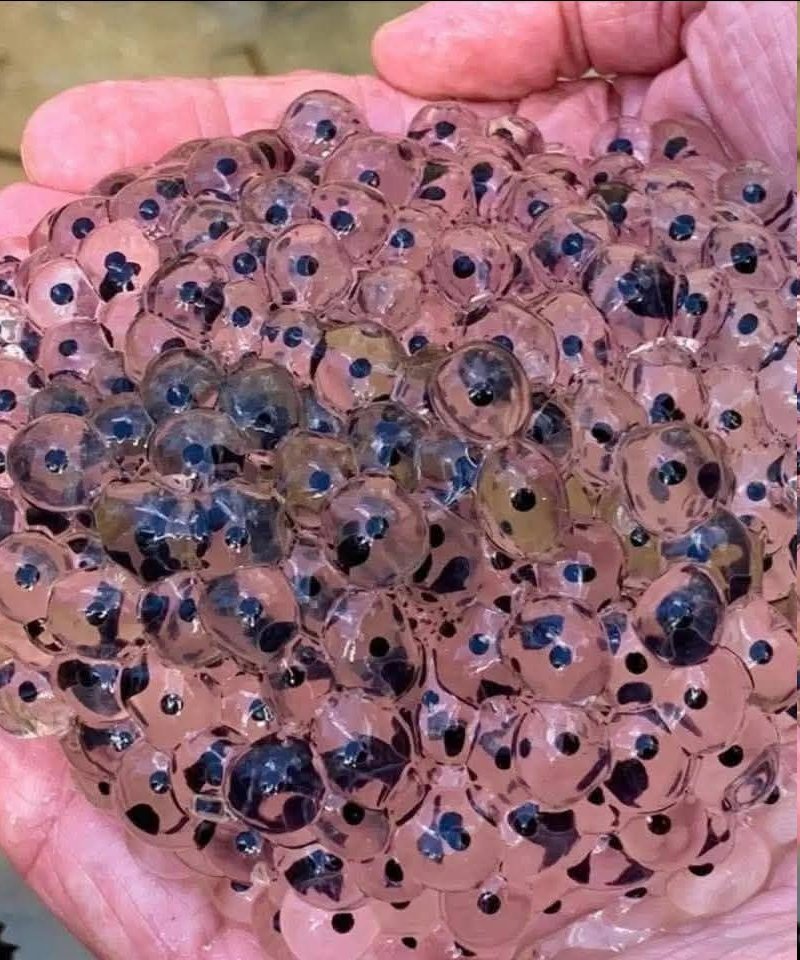
Sometimes, the most fascinating discoveries don’t come from faraway places—but from our own backyards. What started as a simple walk through a rain-soaked field turned into a surprising encounter with nature that sparked curiosity and scientific interest.
What Did the Farmer Discover?
After examining the photos and visiting the location, biologists identified the mysterious clusters as tree frog eggs, most likely from the gray tree frog (Hyla versicolor) or a closely related species.
These eggs have distinct characteristics:
- Found in shallow, temporary pools like rain-filled depressions
- Surrounded by a clear, jelly-like coating
- Laid in clusters of 10–40 eggs
- Typically hatch within 2–5 days, depending on temperature
While they may appear slightly “glowing,” this effect is simply light reflecting off their jelly coating, sometimes giving a bluish or iridescent look.
Why Are Tree Frogs Appearing in New Areas?
Interestingly, tree frogs are now being spotted in regions where they were once rare. Scientists point to two main reasons:
1. Climate Change
- Warmer temperatures allow frogs to survive in previously cooler regions
- Longer warm seasons extend their breeding period
2. Increased Rainfall
- Heavy rains create temporary, fish-free pools
- These pools are ideal for reproduction because they lack predators
This shift highlights how wildlife adapts to environmental changes over time.