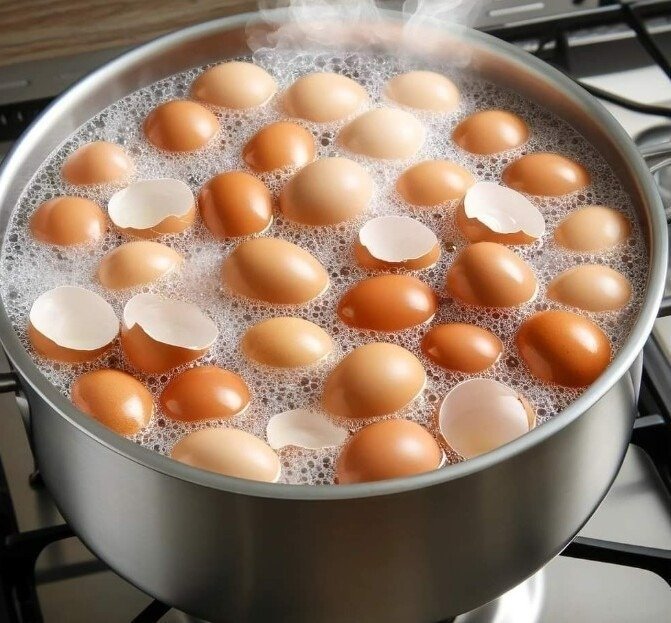
Eggshells can carry Salmonella enteritidis—bacteria that can survive on the shell even after boiling. Here’s what many don’t realize:
-
Boiling may reduce but does not guarantee sterilization of bacteria trapped inside the shell’s pores
-
The FDA recommends cooking eggs to 160°F (71°C) to kill Salmonella in the egg. The shell itself is harder to sterilize completely at home
-
Commercial eggshell powder intended for consumption undergoes industrial processing and testing that home kitchens cannot replicate
The bottom line: Home preparation doesn’t provide the same safety guarantees as regulated food manufacturing.
Poor Absorption Compared to Food Sources
Your body absorbs calcium differently depending on the source. Even if eggshells contain calcium, your body may not use it effectively.
| Calcium Source | Absorption Rate | Notes |
|---|---|---|
| Dairy (milk, yogurt, cheese) | ~30-32% | Gold standard for calcium absorption |
| Fortified plant milks | ~30% | Often comparable to dairy |
| Leafy greens (kale, bok choy) | ~40-50% | High absorption but lower total calcium |
| Calcium supplements (citrate/carbonate) | ~20-40% | Varies by formulation and timing |
| Eggshell powder | Unknown / likely lower | No robust human studies support its bioavailability |
The takeaway: Calcium from whole foods is well-studied, reliable, and proven. Eggshell powder is not.
Physical Irritation Risk
If you don’t grind eggshells into an extremely fine powder (which requires a high-powered blender or grinder), you risk:
-
Sharp particles scratching the delicate lining of your throat or esophagus
-
Potential irritation of the digestive tract
-
In rare cases, small shell fragments could theoretically cause more serious injury
Commercial calcium supplements are milled to a consistent, safe particle size. Home grinders cannot guarantee this.
No Quality Control or Dosage Consistency
-
One eggshell contains approximately 2,000 mg of calcium carbonate (about 800 mg of elemental calcium)
-
But shell thickness varies by hen age, breed, and diet
-
Grinding produces inconsistent particle sizes
-
Without lab testing, you have no way to know the actual calcium content per teaspoon
Compare that to a regulated supplement: Every batch is tested, and the dosage is printed on the label. You know exactly what you’re getting.
What Major Health Organizations Say
The NIH, Mayo Clinic, and Academy of Nutrition and Dietetics do not recommend consuming eggshells as a calcium source.
Why? Because there are safer, more reliable, better-studied options available.
Safe, Reliable Calcium Sources
If you’re concerned about calcium intake—especially for bone health, pregnancy, or aging—these options are backed by decades of research:
Food Sources (Best Absorption)
-
Dairy: Milk, yogurt, cheese (1 cup of milk = ~300 mg calcium)
-
Fortified plant milks: Soy, almond, oat milk (check labels)
-
Leafy greens: Kale, collard greens, bok choy
-
Canned fish with bones: Sardines, salmon (soft, edible bones)
-
Tofu (calcium-set): Check for “calcium sulfate” on ingredient list
-
Fortified orange juice
Calcium Supplements (If Needed)
-
Calcium citrate – Absorbed with or without food; good for people with low stomach acid
-
Calcium carbonate – Take with food for best absorption; less expensive
-
Look for third-party testing (USP, NSF, or ConsumerLab) for quality assurance
The Bottom Line
Eating boiled and ground eggshells is not a safe or reliable way to get calcium.
-
Contamination risk (Salmonella) cannot be eliminated at home
-
Absorption is unproven and likely inferior to food sources
-
Physical irritation risk from sharp particles
-
No dosage consistency or quality control
Save your eggshells for the compost bin or garden, not your smoothie.
Instead, get calcium from:
-
Real food (dairy, leafy greens, fortified plant milks)
-
High-quality supplements (if needed, under healthcare guidance)
Your bones deserve better than unproven internet hacks.