-
Creamy Version: Stir in 1/2 cup of sour cream or Greek yogurt to the dressing for a creamy, deli-style
cucumbersalad.
-
Spicy Kick: Add a pinch of red pepper flakes or thinly sliced jalapeños to the vegetable mix.
-
Added Protein: Toss in some canned chickpeas or feta cheese crumbles just before serving to make it a more substantial meal.
Cheese
Serving and Storage
-
Service: Serve as a cold side dish in individual bowls or as part of a large buffet spread. It pairs beautifully with grilled chicken, steak, or fish.
-
Storage: This salad keeps well in the refrigerator for up to 3-5 days. In fact, it often tastes better on day two as the flavors continue to develop.
-
Pro Tip: If the salad releases too much liquid after a few days, you can drain some of the excess juice, though the marinade itself is highly flavorful.
Benefits
-
Hydrating: Cucumbers and tomatoes have high water content, making this a great hydrating snack for hot days.
-
Low Calorie: Since it is primarily vegetables and a light vinegar dressing, it is a low-calorie addition to any meal.
Fruits & Vegetables -
Digestion: Vinegar is known to aid in digestion, making this a perfect accompaniment to rich or fried foods.
History of Marinated Cucumber Salad
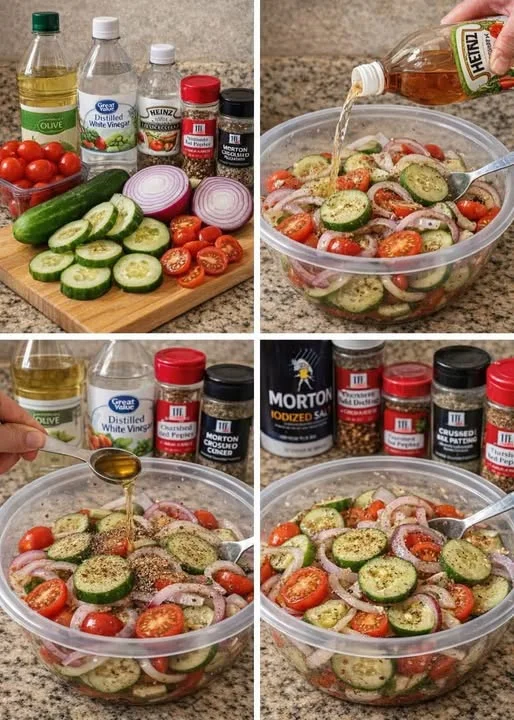
The tradition of marinating cucumbers in vinegar is a culinary practice found in nearly every culture around the globe, from German Gurkensalat to Asian smashed cucumber salads. The practice originally began as a method of preservation; before modern refrigeration, submerging fresh summer vegetables in an acidic brine was a way to extend their shelf life and prevent spoilage during the hottest months of the year.
In the United States, particularly in the South and Midwest, this “Cucumber, Tomato, and Onion Salad” became a staple of rural life. It was a “pantry-staple” dish—using only what was available in the backyard garden and basic kitchen cupboards (vinegar, sugar, and oil). During the Depression era, it was a vital way to provide flavor and nutrition when meat was scarce. Over time, it evolved from a necessity into a beloved comfort food, synonymous with family reunions and Sunday dinners. The addition of sugar to balance the vinegar is a classic American touch, reflecting the preference for “sweet and sour” profiles that define many traditional heritage recipes. Today, it remains a nostalgic reminder of summer harvests and the simplicity of home-grown ingredients.