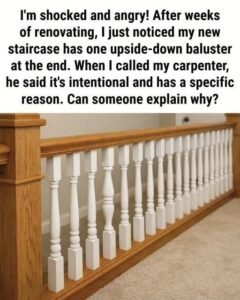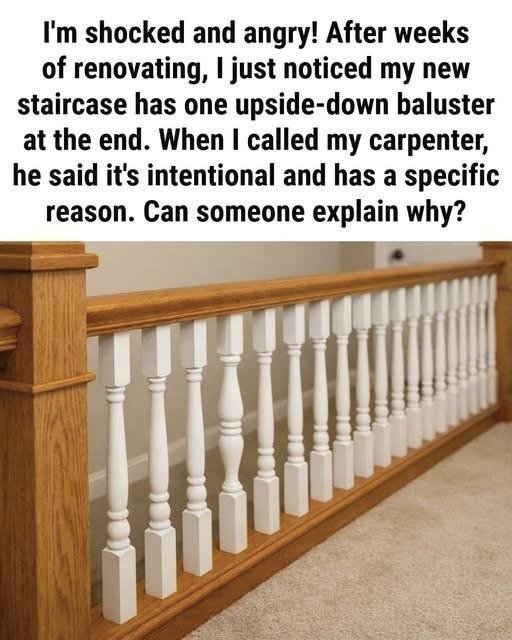
While not tied to “humility” traditions, these scenarios exist:
Artisan signature: A modern woodworker might invert one spindle as a hidden “signature”
Restoration quirk: A preservationist replicating an existing “mistake” for historical accuracy
Deliberate design: Contemporary architects using inversion for visual disruption
But these are conscious artistic choices—not ancient spiritual practices.
 Real “Intentional Imperfections” That Are Documented
If you love this philosophy, focus on traditions with verified roots:
Tradition
Purpose
Cultural Origin
Navajo “spirit line”
Allows weaver’s spirit to exit the rug
Diné (Navajo) Nation
Islamic geometric “flaws”
Acknowledges Allah’s perfection
Islamic architecture (8th c.+)
Persian carpet “kheshti”
Avoids pride in human creation
Persian weaving
Amish “humility blocks”
Rejects vanity in quilting
Amish communities (1800s+)
 Respectful note: These practices are sacred cultural expressions—not decorative tricks. Appreciate them in context.
 Why This Myth Persists (And Why It Matters)
Romanticism: We crave stories that imbue ordinary objects with meaning
Social media: “Hidden secret” posts go viral—truth gets lost in shares
Human desire for connection: Finding “messages” in our homes feels magical
But myths can overshadow real history. True craftsmanship deserves respect without fictional embellishment.
 What to Do If You Find an Inverted Baluster
Examine closely: Is the profile truly asymmetrical? (Many aren’t.)
Check consistency: Are other balusters oriented differently?
Research your home: Built pre-1900? Post-war tract house? Context matters.
Appreciate the craft: Whether intentional or not, it’s part of your home’s story.
 Most importantly: Enjoy the mystery! Even if not “ancient tradition,” it’s a conversation starter that connects you to your home’s journey.
 Final Thought: Perfection Isn’t the Point
Whether the inverted baluster is a “mistake” or a myth, it reminds us of something true:
Homes aren’t museums—they’re living spaces shaped by human hands, quirks, and time.
The beauty isn’t in flawless symmetry. It’s in the patina of use, the whispers of past hands, and the stories we choose to tell about them.
So admire that baluster. Wonder about it. But don’t let folklore blind you to the real magic:
The quiet dignity of work done well—even if it’s not “perfect.”
“A home’s imperfections aren’t flaws. They’re fingerprints of the lives that built it.”
Found an oddity in your home? Research its true history—you’ll uncover stories far richer than myth