Nutritional Information
Per serving (approximate values):
- Calories: 350
- Protein: 4g
- Carbohydrates: 45g
- Fat: 18g
- Fiber: 1g
- Sodium: 200mg
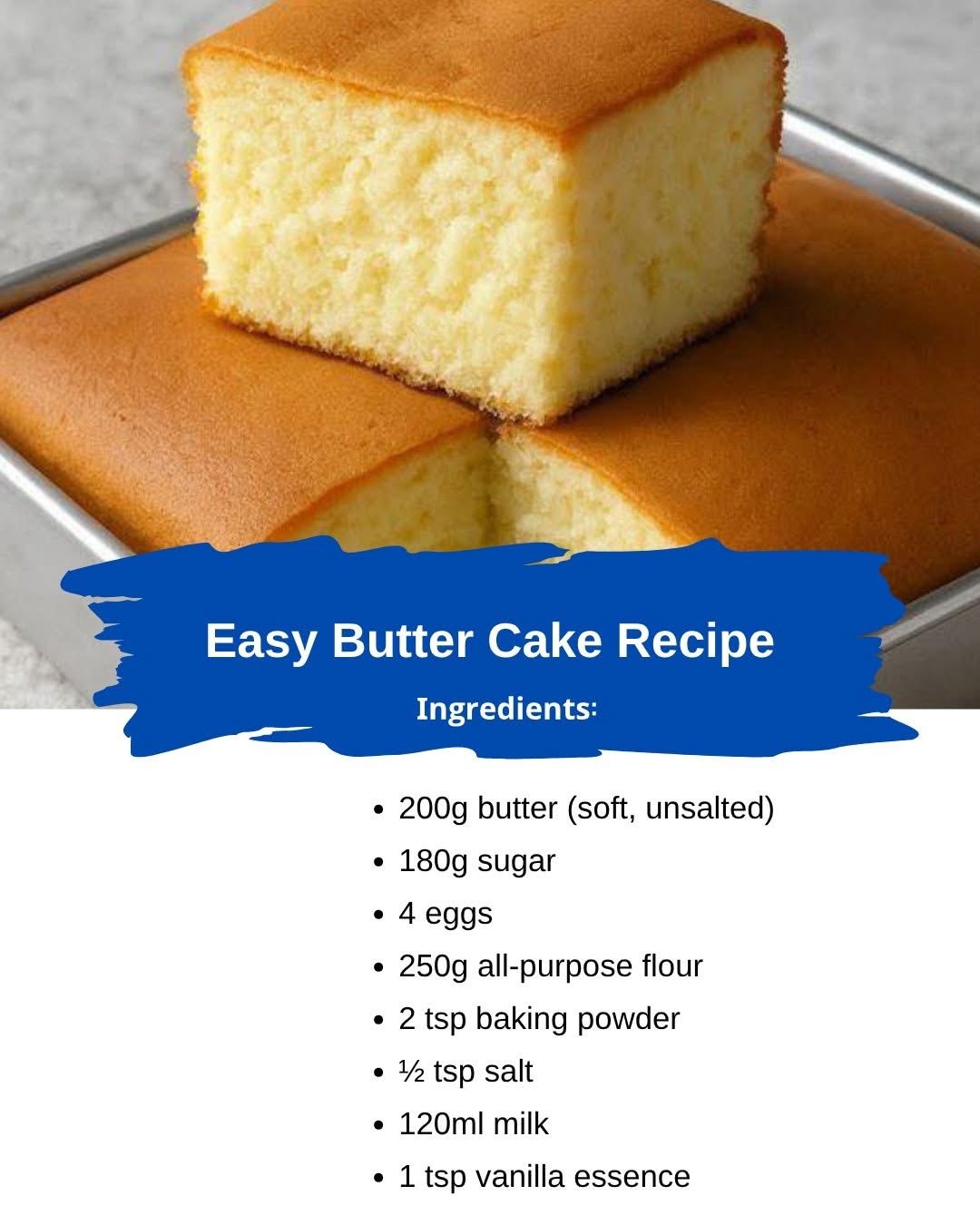
Ingredients
- 2 ½ cups (300g) all-purpose flour, sifted
- 1 teaspoon baking powder
- ½ teaspoon salt
- 1 cup (226g) unsalted butter, softened to room temperature
- 1 ¾ cups (350g) granulated sugar
- 4 large eggs, at room temperature
- 1 cup (240ml) whole milk, at room temperature
- 2 teaspoons pure vanilla extract
Instructions
- Preheat your oven to 350°F (175°C). Grease and flour a 9×9 inch square baking pan or a 9-inch round cake pan. Ensure the pan is thoroughly coated to prevent sticking.
- In a medium bowl, whisk together the sifted all-purpose flour, baking powder, and salt. Set aside. Sifting the flour helps to aerate it and prevent lumps, contributing to a lighter cake texture.
- In a large bowl, using an electric mixer (handheld or stand mixer with paddle attachment), cream together the softened unsalted butter and granulated sugar on medium-high speed for 3-5 minutes, until the mixture is light, fluffy, and pale in color. This creaming process incorporates air, which is crucial for a tender cake. Scrape down the sides of the bowl as needed.
- Add the eggs one at a time, beating well after each addition. Make sure each egg is fully incorporated before adding the next. This helps to emulsify the mixture and prevent it from curdling.
- Reduce the mixer speed to low. Gradually add about one-third of the dry ingredients to the butter mixture, mixing just until combined.
- Pour in half of the whole milk and mix until just incorporated.
- Repeat with another one-third of the dry ingredients, then the remaining milk, and finally the last of the dry ingredients. Mix just until no streaks of flour remain. Be careful not to overmix the batter once the flour is added, as overmixing can develop the gluten and lead to a tough cake.
- Stir in the pure vanilla extract by hand with a spatula until evenly distributed.
- Pour the batter into the prepared baking pan, spreading it evenly with a spatula.
- Bake for 35-45 minutes, or until a wooden skewer or toothpick inserted into the center of the cake comes out clean. The top should be golden brown and spring back lightly when touched.
- Once baked, remove the cake from the oven and let it cool in the pan on a wire rack for 10-15 minutes. This allows the cake to firm up slightly before you attempt to remove it.
- After 10-15 minutes, carefully invert the cake onto the wire rack to cool completely. Cooling on a wire rack ensures air circulation on all sides, preventing condensation and a soggy bottom.
- Slice and serve once the cake has fully cooled. Enjoy your easy, delicious butter cake!
Cooking Tips and Variations
Achieving the perfect butter cake is all about understanding a few key principles and being mindful of your ingredients and techniques. For the best results, always ensure your butter and eggs are at room temperature. This is not just a suggestion; it’s a critical step that allows the ingredients to emulsify properly, creating a smooth, homogenous batter that traps air efficiently during creaming. Room temperature butter creams beautifully with sugar, resulting in a light and airy texture, while cold butter will lead to a dense, tough cake. Similarly, cold eggs can cause the batter to curdle, affecting the final texture.
When it comes to mixing, resist the urge to overmix, especially once the flour has been added. Overmixing develops the gluten in the flour, which can lead to a tough, chewy cake rather than the desired tender, moist crumb. Mix just until the ingredients are combined and no streaks of flour remain. A gently mixed batter yields a delicate, soft cake. Another crucial tip is to accurately measure your ingredients. Baking is a science, and precise measurements, especially with flour, can make a significant difference. Using a kitchen scale for flour, if possible, is ideal, but if using measuring cups, spoon the flour into the cup and level it off with a straight edge rather than scooping directly from the bag, which can compact the flour and lead to too much being used.
For even baking, consider rotating your cake pan halfway through the baking time. Ovens often have hot spots, and rotating the pan ensures that the cake bakes uniformly, preventing one side from browning more quickly than the other. Always check for doneness using the toothpick test: insert a wooden skewer or toothpick into the center of the cake. If it comes out clean or with a few moist crumbs attached, the cake is done. If it comes out with wet batter, continue baking for a few more minutes and test again. Overbaking can lead to a dry cake, so it’s better to err on the side of slightly underbaked than overbaked.
This easy butter cake is incredibly versatile and lends itself well to various delicious variations. To add a citrusy brightness, incorporate the zest of one lemon or orange into the sugar during the creaming stage. The oils in the zest will infuse the cake with a wonderful aroma and flavor. For an almond-flavored twist, substitute half of the vanilla extract with almond extract. You can also add a simple glaze by whisking together powdered sugar with a little milk or lemon juice and drizzling it over the cooled cake. For a richer, more decadent cake, consider folding in a cup of chocolate chips or chopped nuts into the batter just before pouring it into the pan. If you’re feeling adventurous, a swirl of cinnamon sugar or a ribbon of fruit preserves can also be added to the batter for an extra layer of flavor and texture. Don’t be afraid to experiment and make this classic recipe your own!