Instructions
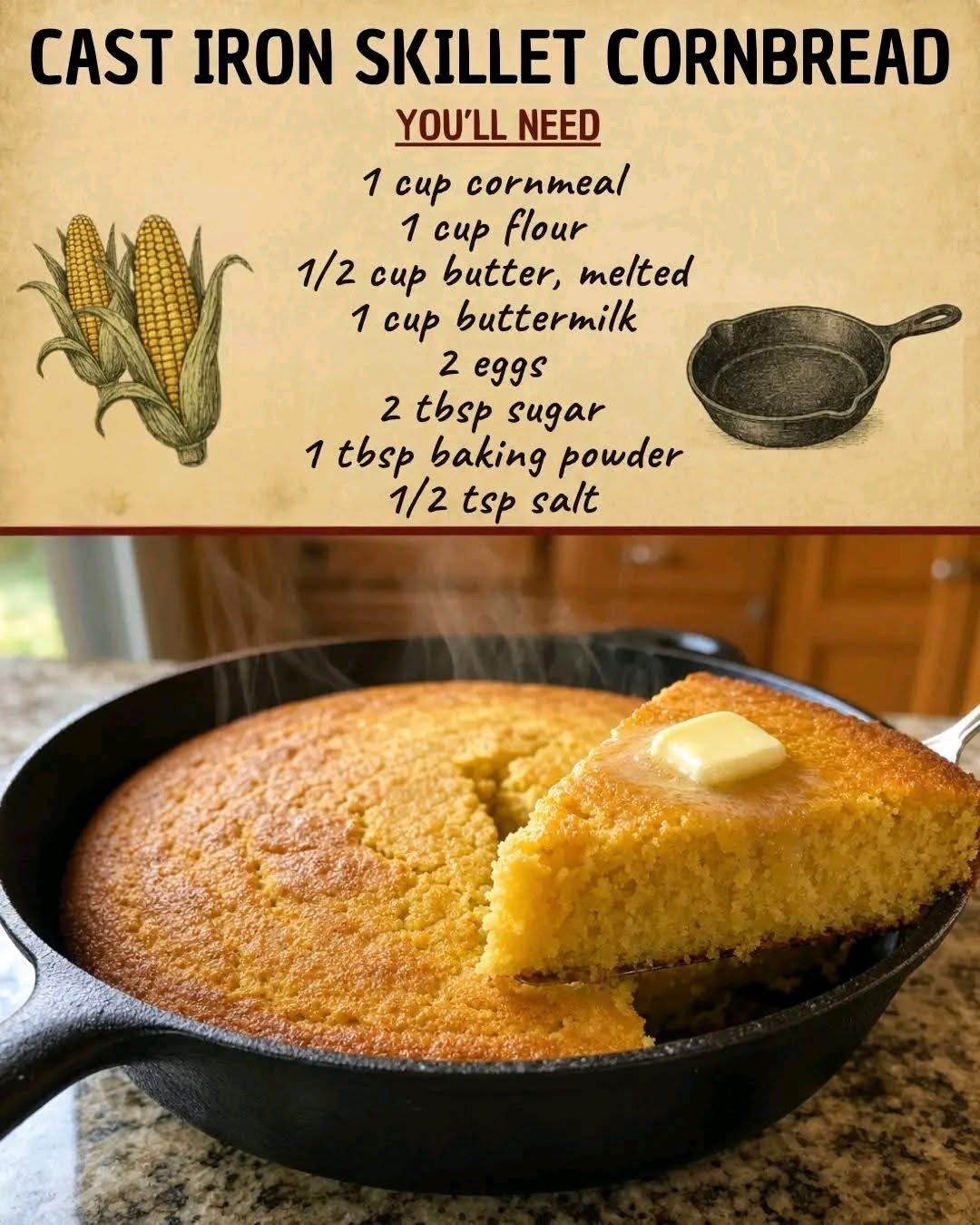
- Preheat your oven to 400°F (200°C). Place a 10-inch cast iron skillet in the oven while it preheats. This crucial step ensures a wonderfully crispy crust.
- In a large mixing bowl, whisk together the dry ingredients: cornmeal, all-purpose flour, granulated sugar, baking powder, baking soda, and salt. Make sure there are no lumps and everything is well combined.
- In a separate medium bowl, whisk together the wet ingredients: buttermilk and lightly beaten eggs.
- Once the oven and skillet are preheated, carefully remove the hot skillet from the oven using oven mitts. Add 2 tablespoons of melted butter to the hot skillet, swirling it around to coat the bottom and sides thoroughly. The butter should sizzle immediately.
- Pour the remaining ½ cup of melted butter into the wet ingredients mixture, stirring until just combined.
- Pour the wet ingredient mixture into the dry ingredient mixture. Stir with a spoon or spatula until just combined. Be careful not to overmix; a few lumps are perfectly fine and will lead to a more tender cornbread. Overmixing develops gluten, which can result in tough cornbread.
- Immediately pour the batter into the hot, buttered cast iron skillet. The batter should sizzle as it hits the hot pan.
- Carefully return the skillet to the preheated oven.
- Bake for 20-25 minutes, or until the top is golden brown and a toothpick inserted into the center comes out clean. The cooking time may vary slightly depending on your oven and the thickness of your cornbread.
- Once baked, remove the skillet from the oven and let the cornbread cool in the skillet for about 5-10 minutes before slicing and serving. This allows it to set and makes it easier to remove from the pan.
- Serve warm with a pat of butter, a drizzle of honey, or alongside your favorite chili or BBQ.
Cooking Tips and Variations
Achieving the perfect cast iron skillet cornbread is an art, but these tips and variations will help you master it and customize it to your liking.
Tips for Best Results:
- Don’t Overmix: This is perhaps the most important rule for tender cornbread. Mix the batter just until the wet and dry ingredients are combined. Lumps are okay! Overmixing develops gluten, leading to a tough, dense texture.
- Hot Skillet is Key: Preheating your cast iron skillet in the oven until it’s smoking hot is non-negotiable for that signature crispy, golden-brown crust. Don’t skip this step! The instant sizzle when the batter hits the hot pan is what creates that magical texture.
- Grease Generously: Ensure your hot skillet is well-greased with butter or bacon fat. This not only prevents sticking but also contributes to the incredible flavor and crispiness of the crust. Bacon grease adds a wonderful savory depth.
- Buttermilk for Moisture and Tang: Buttermilk reacts with the baking soda, creating a lighter, more tender crumb and adding a delightful tangy flavor. If you don’t have buttermilk, you can easily make a substitute by adding 1 tablespoon of lemon juice or white vinegar to regular milk and letting it sit for 5 minutes before using.
- Stone-Ground Cornmeal: While any yellow cornmeal works, stone-ground varieties often offer a richer corn flavor and a slightly coarser, more rustic texture that many people prefer in their cornbread.
- Check for Doneness: The toothpick test is your friend. Insert a toothpick into the center of the cornbread; if it comes out clean, your cornbread is done. The top should also be beautifully golden brown.
- Serve Warm: Cornbread is best enjoyed warm, ideally fresh out of the oven. The flavors are most vibrant and the texture is at its peak.
Recipe Variations:
- Jalapeño Cheddar Cornbread: For a spicy, savory kick, fold in ½ cup of shredded sharp cheddar cheese and ¼ cup of finely diced pickled jalapeños (or fresh, deseeded jalapeños for more heat) into the batter before baking.
- Sweet Cornbread: If you prefer a sweeter cornbread, increase the sugar to ½ cup or add a couple of tablespoons of honey or maple syrup to the wet ingredients. You can also add a can of drained sweet corn kernels to the batter for extra sweetness and texture.
- Herby Cornbread: Incorporate fresh chopped herbs like chives, rosemary, or thyme (1-2 tablespoons) into the batter for an aromatic twist. These pair wonderfully with savory meals.
- Bacon Cornbread: Fry 3-4 strips of bacon until crispy. Crumble the bacon and fold it into the batter. Use some of the rendered bacon fat to grease the skillet for an extra layer of smoky flavor.
- Spiced Cornbread: A pinch of cayenne pepper or chili powder can add a subtle warmth and depth, especially if serving with chili or stews.
- Gluten-Free Option: While this recipe uses all-purpose flour, you can experiment with a 1:1 gluten-free flour blend for a gluten-free version. Ensure your cornmeal is certified gluten-free.
- Different Fats: While butter is excellent, you can also use rendered bacon fat, lard, or vegetable shortening for greasing the skillet and even in the batter for different flavor profiles.
Storage and Reheating
Proper storage and reheating ensure your delicious cast iron skillet cornbread remains enjoyable for days after baking.
Storage:
- Room Temperature: Once completely cooled, wrap the cornbread tightly in plastic wrap or aluminum foil, or store it in an airtight container. It will keep well at room temperature for 1-2 days.
- Refrigeration: For longer storage, you can refrigerate the cornbread for up to 5 days. Again, ensure it’s tightly wrapped to prevent it from drying out.
- Freezing: Cornbread freezes beautifully! Once completely cooled, wrap individual slices or the entire cornbread tightly in plastic wrap, then an additional layer of aluminum foil. Freeze for up to 3 months. Thaw overnight in the refrigerator before reheating.
Reheating:
- Oven: This is the best method for restoring that crispy crust. Preheat your oven to 350°F (175°C). Place slices of cornbread directly on a baking sheet or wrap the whole cornbread in foil. Heat for 10-15 minutes, or until warmed through. If you want to crisp up the crust even more, unwrap it for the last few minutes.
- Toaster Oven: For individual slices, a toaster oven works wonderfully. Heat at 350°F (175°C) for 5-7 minutes, keeping an eye on it to prevent burning.
- Microwave: While quick, the microwave can sometimes make cornbread a bit rubbery or dry. If using, heat individual slices on a microwave-safe plate for 15-30 seconds, or until warm. It’s best for simply warming, not for restoring crispness.
- Skillet (Stovetop): For a nice warm slice with a slightly crisped exterior, heat a dry cast iron skillet over medium-low heat. Place slices of cornbread in the skillet and heat for 2-3 minutes per side, or until warmed through and lightly toasted.
Frequently Asked Questions
Why is my cornbread dry and crumbly?
Dry and crumbly cornbread is often a result of overbaking or overmixing the batter. Overmixing develops the gluten in the flour, making the cornbread tough and dry. Overbaking removes too much moisture. Ensure you only mix until the ingredients are just combined and remove the cornbread from the oven as soon as a toothpick inserted into the center comes out clean. Using buttermilk also helps keep it moist.
Can I make this recipe without a cast iron skillet?
While a cast iron skillet is highly recommended for the best results (especially for that crispy crust), you can bake this cornbread in another oven-safe pan, such as a 9×9 inch square baking dish or a round cake pan. However, you won’t get the same intense crispy crust as you would from a preheated cast iron skillet. If using a different pan, still preheat it with butter in the oven for at least 10 minutes before adding the batter to help achieve some crispness.
What’s the difference between Northern and Southern cornbread?
Traditionally, Southern cornbread is made without sugar and often uses only cornmeal, resulting in a savory, dense, and often crumbly texture, frequently cooked in bacon grease. Northern cornbread, on the other hand, typically includes flour, sugar, and baking powder, making it sweeter, lighter, and more cake-like. This recipe, with its inclusion of both flour and a moderate amount of sugar, is a delicious hybrid, offering the best of both worlds – the crispy crust of Southern tradition with a slightly sweeter, tender crumb.