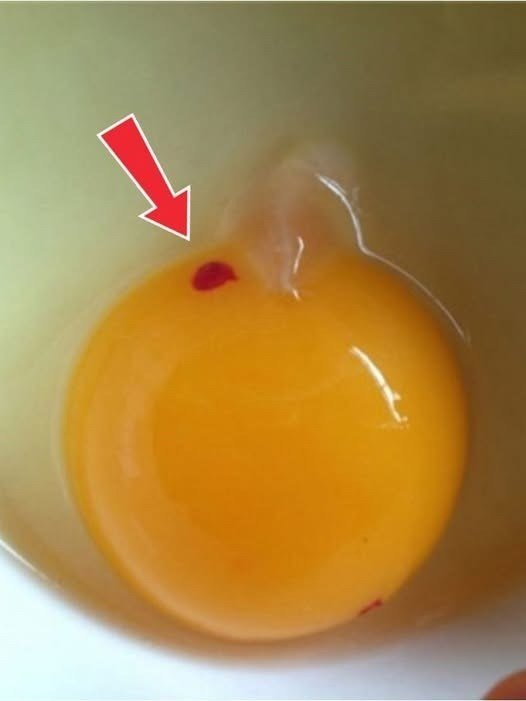
Many home cooks have had this moment: you crack open an egg, and instead of a smooth golden yolk, you notice a tiny red spot. It can be surprising, especially if you’re used to clean-looking, store-bought eggs. Some people throw the egg away immediately, while others simply continue cooking and don’t think twice. Because this question comes up often, it’s helpful to understand what these spots really are and whether the egg is still safe to enjoy.
Eggs remain a staple in many American kitchens, especially for older adults who appreciate simple, nutritious foods. Knowing what’s normal and what isn’t can bring peace of mind and help reduce unnecessary waste. With a bit of background, it becomes easier to tell when an egg is perfectly fine to use and when it’s better to set it aside.
Are Eggs With Red Spots Safe to Eat?
Yes. In most cases, an egg with a small red spot is safe to cook and enjoy, as long as it is fully cooked. The spot may look concerning, but it does not indicate harm. If you prefer, you can gently lift it out with the tip of a small utensil before preparing the egg. Many people do this purely for visual reasons, not safety.
You may occasionally notice tiny brown specks in the egg white as well. These come from harmless bits of tissue that the egg picked up as it traveled through the hen’s system. These, too, are safe and do not affect the quality of the egg.
However, unusually colored egg whites—such as pink, green, or distinctly red throughout—should be set aside. These rare signs can indicate that the egg is no longer fresh enough to enjoy safely. When in doubt, it’s always best to choose a different egg.
How Common Are These Red Spots?
Fewer than one egg in a hundred contains a red spot. This is particularly true for eggs sold in grocery stores, where most undergo a grading process called candling. A bright light is used to check the inside of the egg for imperfections, and eggs with noticeable spots are typically removed before packaging.
This sorting process is not about safety, but about appearance. Most shoppers prefer eggs that look clean and consistent, so stores simply avoid stocking eggs with visible spots.
Farm-fresh eggs are a different story. Because they are not usually graded in the same way, these occasional natural markings are more likely to appear. Brown-shelled eggs may also show spots more often because the darker shell makes these tiny imperfections harder to spot during inspection.
Why Do These Spots Form?